Looking after it.
A recovered piece will give you years if you treat it sensibly. None of this is fussy. It is the handful of things that genuinely make the difference between a cover that holds up and one that tires early.
Every week, more or less
Turn and plump loose cushions so they wear evenly, the same way you would turn a mattress. Give the piece a going-over with the brush head of the vacuum to lift out grit before it works into the weave. Five minutes a week is worth more than any amount of deep cleaning later.
Keep it out of the strong sun
Direct sunlight is the quiet killer of upholstery. It fades fabric and dries out leather, and it does it uneven, so one arm ends up paler than the other. If a piece has to sit in a bright window, draw the curtains in the middle of the day and rotate it now and again.
Spills and marks
Blot, never rub. Lift what you can with a clean dry cloth first, working from the outside of the mark inwards so you do not spread it. For most fabrics a little lukewarm water with a touch of mild soap will do, but test it on a hidden patch first and never soak the cloth through to the filling.
Velvet
Velvet marks as you sit on it, that is the pile catching the light, and it brushes out. Smooth it with a soft clothes brush in one direction. To lift a crush or a dent, hold a steam iron just above it, no contact, and brush the pile back up as it warms. Do not scrub it.
Leather
Dust it and wipe it down with a barely damp cloth. Once or twice a year, feed it with a proper hide cream to keep it supple, a little, worked in well, not a heavy coat. Keep leather a hand's width off radiators and out of the sun, which is what cracks it.
Loose threads and small tears
If a thread pulls, snip it level with a scissors. Never tug it, you will only run the seam. A small split or a popped button is a five-minute job if it is caught early and a much bigger one if it is left to open up. Ring me when you spot it.
When it is worth doing more.
A worn arm or a gone seat does not always mean a full recover. Often a repair to one panel, a re-spring, or a new set of cushion fills buys a piece several more years and costs a fraction of the job.
The honest answer depends on the frame, the age and how the cover has worn overall. Send me a photo and I will tell you which way I would go if it were mine.
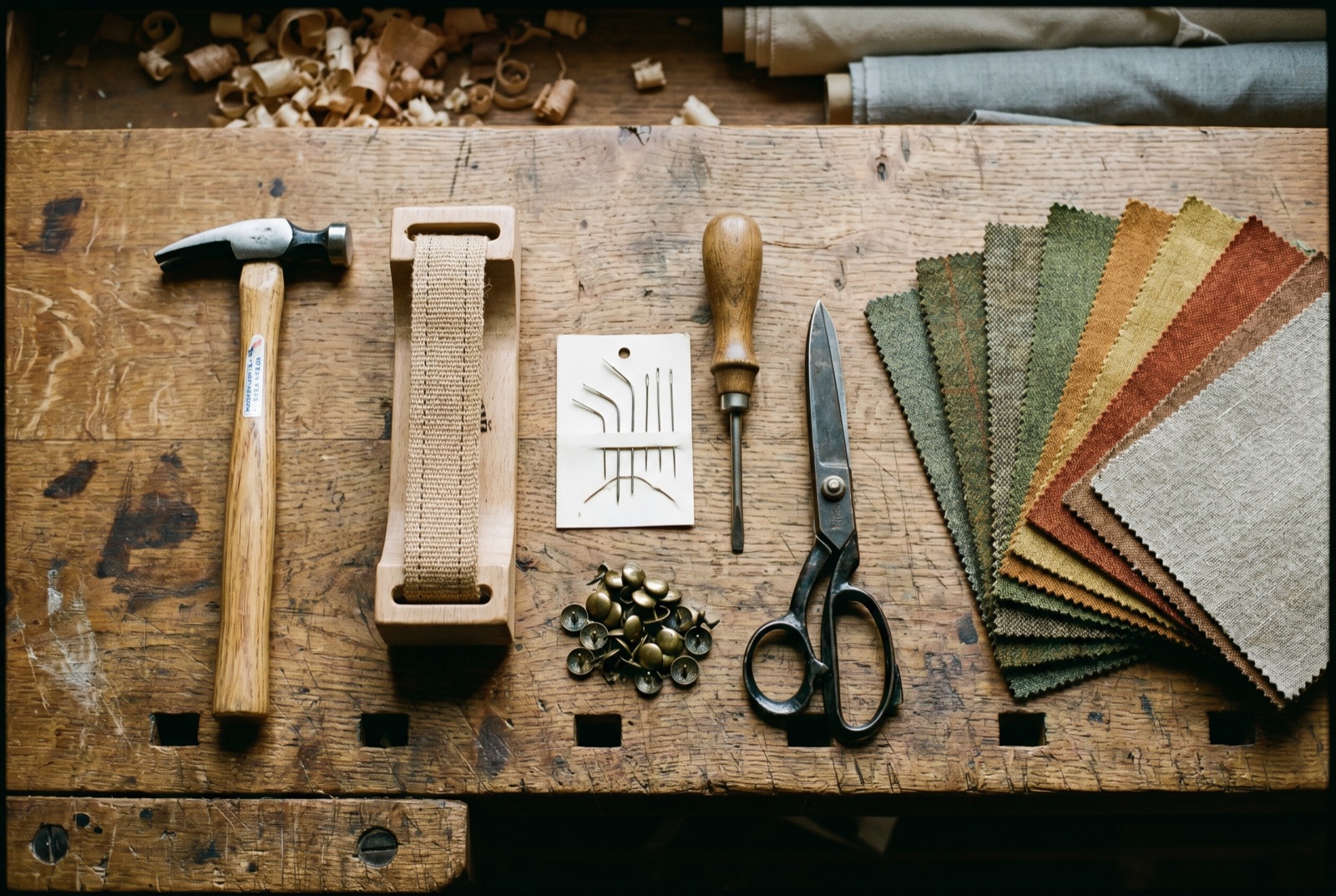
When in doubt, ask before you do anything.
A quick photo and a question costs nothing, and it can save a good piece from a well-meant mistake.